









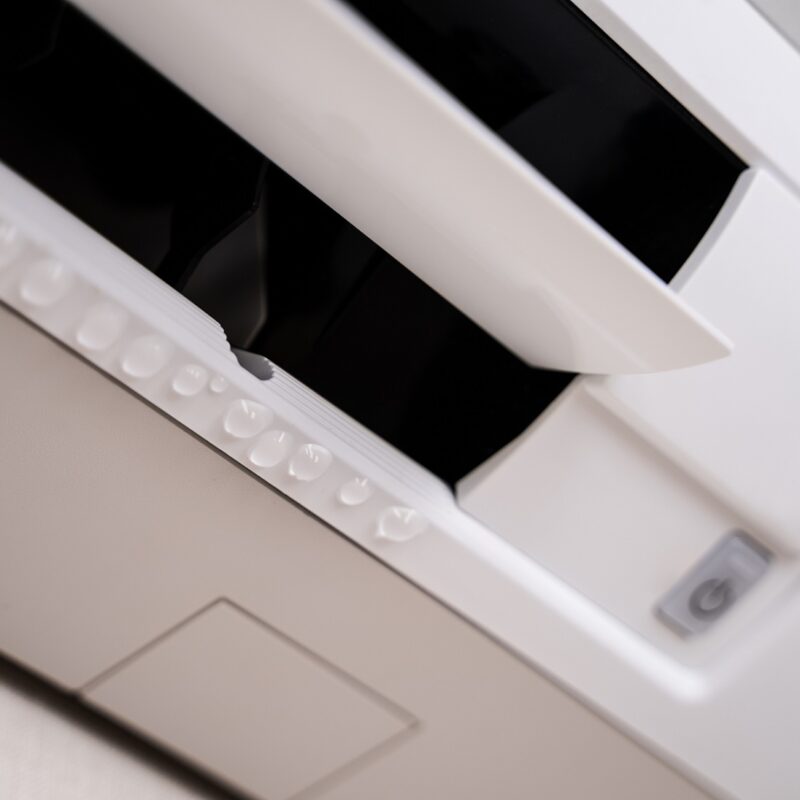
Have you ever wondered why your air conditioner is dripping water? The dehumidification process in ducted air conditioning systems naturally creates condensation.
However, if it is excessive to the point of a leak, then something is wrong. It is important to diagnose why your system is leaking so the problem can be repaired and prevented from further occurrence.
Here’s some factors that may help clear some of the suspicions about water leaking from your ducted air conditioning in Brisbane.
- Excess condensation is normal, but if water is dripping from your ducted system, something is wrong, and it needs attention.
- Dirty filters are one of the most preventable causes of leaks; clean your return air filter at least once a month.
- Know the warning signs: water stains on the ceiling, bubbling paint, or sagging plaster all indicate a leak that needs urgent attention.
- Blocked drains, low refrigerant levels, poor insulation, and faulty drain pans are the most common culprits, all of which are avoidable with the right installation and servicing.
- Regular maintenance is the most effective way to prevent a leak before it becomes costly ceiling damage. Service your system annually for residential, every six months for commercial.
Ducted air conditioning leaking water? Here are the most common causes
1. Extreme and ongoing humid weather
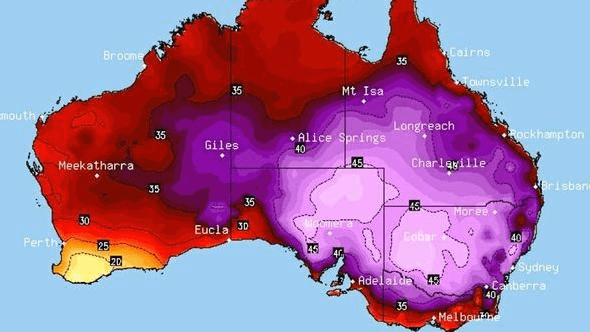
Brisbane and its surrounding suburbs are well known for the hot, humid weather. Hence, the reason most consumers choose to install air conditioning is to escape the muggy atmosphere. This humid air will increase the rate of condensation because ducted air conditioning is designed to remove moisture/humidity from the air. During a Brisbane summer, your system is working harder than anywhere else in the country, which means more water to manage.
2. Little or no insulation
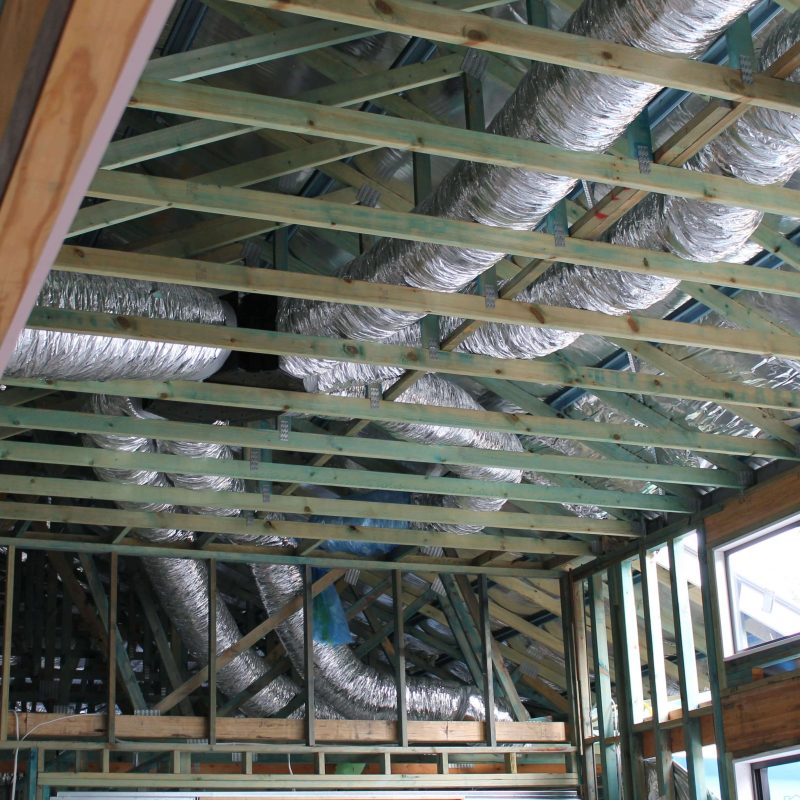
Insulation is the key to preventing air conditioning leaks from occurring. If the insulation has torn away or there is no insulation, then the condensate from the pipes that run through the roof will drip directly onto the ceiling. If there is no insulation on the ceiling (in the roof cavity), then the watermarks will affect the ceiling. This is one of the most common causes for water leaks.
3. Dirty air filter
This is located in the 'return air grille'. If the filter is clogged or dirty, the airflow to the evaporator coil will be blocked or restricted, causing the temperature to drop. If the evaporator coil gets too cold, it can freeze over and ice up. When the AC is off, the indoor unit stops trying to draw air, allowing the unit to warm up and melt the ice. This drips too much water into the drip tray.
This is why it is essential that your filters be cleaned monthly and that the whole system be serviced annually.
4. Low refrigerant
Just like a dirty air filter, when refrigerant levels are low, the pressure in the AC system drops, which can cause the evaporator coil to freeze over. When the coil melts, the water overflows into the drip tray. Signs that will show that refrigerant levels are low include:
- The air conditioner isn’t cooling well
- A hissing or bubbling noise will occur, indicating a refrigerant leak in the piping
Refrigerant leaks can take hours to locate. Depending on the severity of the refrigerant leak, it will have to be repaired or the whole system replaced.
5. Blocked drains
Attached to the indoor unit drain is a drain pipe that runs into the roof gutter. If either the drainpipe or the gutter is blocked, the water can’t run through, and it will build up inside the unit. A safety drip tray is installed under the indoor unit to catch excess water from the unit. If this hasn’t been cleaned for a while, it could potentially leak elsewhere.
In Brisbane, blocked drains aren't always caused by dirt and debris alone. Local pests — including geckos, wasps, and even possums — are known to nest inside outdoor units or block drain outlets. Wasps in particular will build nests in the confined spaces around drainage points, and gecko activity inside units is very common in SEQ. If you've ruled out the usual suspects, it's worth having a technician check for pest-related blockages.
6. Disconnected drain line
This refers to the joint between the indoor unit and the drain line that runs into an external gutter. This is usually joined together by PVC and can wear away after a long period of time. In some cases, though, the connection was never right to begin with. If a drain line is installed at the wrong angle or elevation during the original installation, water flows back into the unit rather than away from it. This is why choosing a quality installer matters from day one.
7. Damaged or rusted drain pan
Drain pans are made of quality customised sheet metal to suit the size and brand of the unit. These are very durable; however, over a long period of time, they can start to deteriorate. If a hole has rusted or a crack formed in the tray, the water will leak out.
The first five reasons are more likely to be the culprit for your leaking air conditioning. However, in an unlikely event where it’s none of the first five reasons, check reasons 6 and 7 to see if this is where the issue lies.
What you can do if you have a leaking air conditioner
Some leaks can be assessed safely before calling a technician, and some can't. Here's a simple guide:
You can safely check yourself:
- Clean or rinse the return air filter (found at the grille, usually in a hallway or ceiling). If it's clogged, this alone may resolve the problem
- Check that your outdoor unit isn't visibly blocked by debris, nesting material, or vegetation
- Look at your gutters and downpipes. If the drain line runs into a blocked gutter, clearing it may stop the leak
Call a technician for:
- Any sign of refrigerant issues (poor cooling, hissing sounds, ice on the unit)
- Water staining, bubbling paint, or sagging plaster on the ceiling
- A system that is less than a few years old and already leaking, it could be a sign that it needs to be investigated for installation issues
- Anything inside the roof cavity, including the drain pan, indoor unit, or drain line
If in doubt, it's always better to have it looked at early. Water damage to ceilings and plaster is far more expensive to fix than the service call that could have prevented it.
Ways to prevent your air conditioning from leaking
1. Quality insulation
This is the key to preventing AC leaks. Insulation should be installed on all equipment and used to line the roof cavity for maximum protection. Over time, insulation can tear away or compress. If your system is more than 10 years old, it's worth having it checked during your next service.
2. Regularly clean your filter
We recommend cleaning your return air filter at least once a month, and more frequently during the height of Brisbane's summer when the system is running constantly. A blocked filter is one of the most common causes of leaks and one of the easiest to prevent.
Not sure how to clean your filter? We've got a step-by-step guide here.
3. Turn your air conditioning on at the right time of day
Avoid running your system during the hottest and most humid parts of the day if possible. Pre-cooling your home in the morning, before humidity peaks, reduces strain on the system and the amount of condensation it has to manage.
4. Quality equipment
Cheaper units and components are not built to handle the demands of South East Queensland's climate. Strong, durable equipment is far less likely to corrode, crack, or fail, and when it does need attention, quality parts are easier to service and replace.
5. Annual Maintenance Check
Have a qualified technician service your system every 12 months for residential, or every 6 months for commercial. A proper service should include cleaning and inspecting the drains, checking for blockages or damage, testing refrigerant levels to ensure the system has enough gas to run efficiently, and cleaning or replacing the filter. Catching a small issue during a routine service is always cheaper than repairing water damage after the fact.
Still got a leaking air con? Reach out to Quality Air
Did we install your ducted air conditioner? Give us a call when your system is due for a service. You will know when this is due by a sticker placed on the wall controller or the outdoor unit.
Remember, we highly recommend getting the system serviced once a year for residential and every six months for commercial to make sure everything is running okay. This helps prevent issues rather than trying to repair issues once the damage is already done. We can also help with servicing and repairs on units we didn’t install; however, we cannot be held responsible for any past installation-related damage.
We install a safety tray under the indoor unit at the time of installation. This is to back up the drain tray in the unit. In the unlikely event that the units drain overflows, the safety tray is there to catch the leaks and minimise the risk of water reaching the ceiling.
As a company, we at Quality Air use the best quality equipment, duct, materials, and labour available. We will not compromise on quality for price. Why? Because we know from 30 years of experience that cheap materials and labour result in costly repairs down the track.
If you are looking to test your air conditioner or would like to book a service, call 3395 7633 or fill out the enquiry form below.








Frequently asked questions
Not sure what to expect? These common questions might help.
Once a year is usually enough for most homes. For commercial systems or heavy use, more frequent servicing may be recommended.
Most services take between 45 and 90 minutes, depending on the system size and condition.
If it’s not cooling or heating properly, making strange noises, leaking, or pushing out weak airflow — it’s time to get it checked.
We don’t offer 24/7 emergency work, but we respond quickly during business hours and aim to prioritise urgent issues.